
China's excavator manufacturers sold 191,557 machines in the first eight months of 2026, up 24.2 percent year on year, with exports of 96,938 units up 31.8 percent, according to sales data published by the China Construction Machinery Association in September 2026. For anyone selling wear parts, the export number is the one that matters: every one of those machines will consume teeth, pins, bushings and undercarriage long before it needs an engine.
What did the 2026 numbers actually show?
Two views of the same trend — a recovering domestic market and a strongly growing export book:
- August 2026: 19,716 excavators sold, up 19.3 percent year on year. Domestic sales 7,986 units, up 3.9 percent. Exports 11,730 units, up 32.7 percent.
- January–August 2026: 191,557 units sold, up 24.2 percent. Domestic 94,619 units, up 17.4 percent. Exports 96,938 units, up 31.8 percent.
- Loaders, for context: 104,658 units in the same eight months, up 25.8 percent; 10,832 in August alone, up 14.7 percent.
Note the shape of it: in the traditional low season, domestic volume grew modestly while export volume grew at roughly eight times that rate. More than half of Chinese excavator production is now leaving the country.
Why do exports matter more to wear-part suppliers than new-machine sales?
Because a machine in service generates parts demand every hour it works, and the export fleet is working hardest in exactly the conditions that consume wear parts fastest. A new excavator in abrasive, hot and dusty conditions can need a track chain and idler set inside 2,000–4,000 hours, and bucket teeth within hundreds of hours in rock. The same machine in soft, benign soil may reach 4,000 hours before the undercarriage is due.
The second reason is the service network. A fleet spread across Africa, Southeast Asia, the Middle East and South America is not served by a dense dealer network. Parts counters thin out quickly away from capital cities, and lead times from the factory brands stretch. That gap is filled by aftermarket supply, which is why export growth shows up as demand for accessible parts rather than as a rise in dealer parts orders.
Which parts move first on a young, hard-working fleet?
- Ground engaging tools. Teeth, adapters and cutting edges, consumed by abrasion at a rate set by the ground, not the machine.
- Pins and bushings. The bucket and linkage joints, where clearance grows and is measurable.
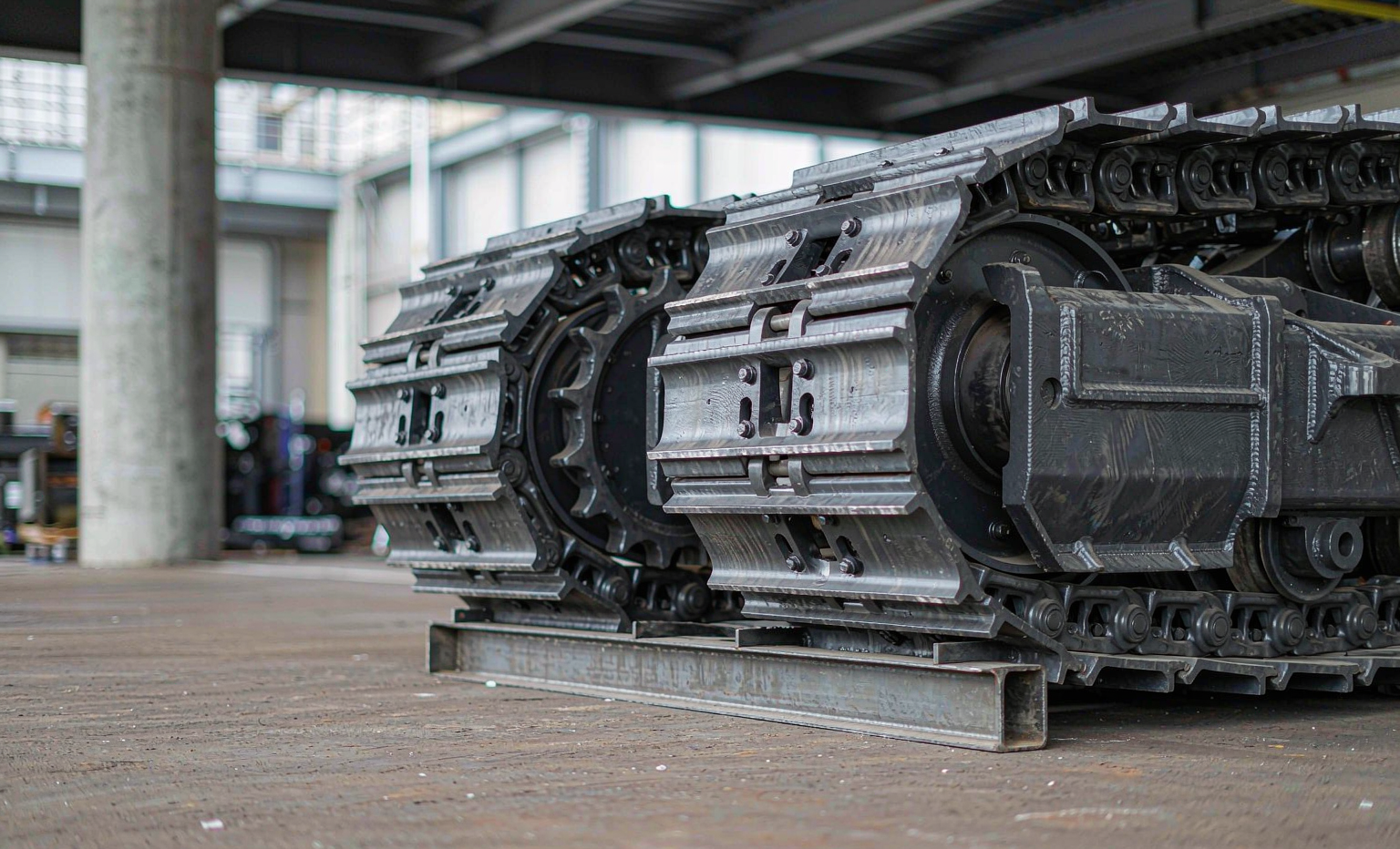
- Undercarriage. Track chains, rollers, idlers, sprockets and track shoes are the largest single line in an excavator's lifecycle cost.
- Hydraulic wear parts. Seal kits, hoses and cylinder repair components — the accessories rather than the assemblies.
- Filters and service items, bought on interval rather than on failure.
Electrification is real but has not changed this yet. Electric excavator sales grew strongly in 2026 from a very small base, still under five percent of the market. The overwhelming majority of the working fleet is diesel, and diesel machines are what the aftermarket will be maintaining for the next decade.
Where is that demand concentrated?
- Africa — the growth stand-out, with a large share of demand mining-driven. Wear parts such as bucket teeth, adapters and liner plates move fastest here.
- Southeast Asia — a fleet-renewal cycle, with buyers building local stockrooms and consolidating mixed shipments of wear, hydraulic and engine parts.
- Middle East — large infrastructure programmes generating bulk, deadline-driven orders.
- South America — mining and agricultural development, often on mixed fleets of several brands.
- Europe — a mature fleet where the pressure is on keeping older machines running when manufacturer supply has already ended.
What should a distributor or fleet stock ahead of the next peak?
- Matched undercarriage sets, not single components. Replacing one worn roller or one section of chain against worn neighbours guarantees a repeat teardown. Order the complete set: chain, rollers, idler and sprocket together.
- Teeth and adapters in the two or three most common systems used by the fleet, not one system per machine brand.
- Pins and bushings by common diameter, since a pin is specified by diameter, length and retaining type rather than by machine brand.
- Seal kits and hoses ahead of the service interval rather than after a leak.
- Buffer stock of predictable consumables held to cover the second-half surge, because a container that arrives three weeks late costs more in idle machine hours than the parts themselves.
The common thread in all five is consolidation: fewer part numbers, ordered in full sets, from a supplier who verifies part numbers against the machine model before shipping.
What this means for buyers
Rising Chinese export volumes put downward pressure on unit prices through scale, and they broaden the range of models for which parts remain in production long after the original machine series ended. The risk is not availability — it is specification. Growing volume brings out the low end of the market alongside the good end. Ask for material grade and hardness data, confirm fitment against the model and serial before shipment, and buy bucket teeth, undercarriage and excavator parts from a source that can answer technical questions rather than only quote a price.