What warranty do Chinese excavator parts suppliers actually give?
Most established Chinese aftermarket suppliers offer 6 to 12 months against material and manufacturing defects, and most of them exclude wear parts from that cover entirely. The headline period matters far less than three things it hides: when the clock starts, what sits in the exclusions list, and who pays freight on a claim.
How long is a typical excavator parts warranty?
Warranty on excavator parts is almost never one number. It is tiered by what the part is and how it fails, and the tiers are fairly consistent across the industry:
- Core hydraulic and drive components — pumps, travel and swing motors, cylinders, turbochargers: commonly 3 to 6 months.
- Structural and undercarriage parts — track chains, rollers, idlers, sprockets, booms, pins: commonly 3 to 6 months.
- General mechanical parts — bearings, gears, linkage components: often 6 to 12 months.
- Wear parts — bucket teeth, cutting edges, seals, filters, hoses, and often bushings: frequently excluded, or covered for 30 to 90 days at most.
That last line is where most disputes start. A bucket pin or a bucket tooth is sold to be consumed, so a supplier can reasonably argue that any failure is wear. A buyer can reasonably argue that a pin which snapped at 200 hours did not wear out. The way to settle it in advance is to get the specific part family named in writing rather than accepting "12 months warranty" on a quotation.
When does the warranty clock actually start?
This is the clause that quietly costs buyers the most. Many Chinese suppliers start the period at the date of shipment or the bill of lading. Sea freight from Qingdao to Mombasa, Lagos or Santos runs roughly 25 to 45 days, then customs clearance and inland transport add more. A 6-month warranty that starts at the bill of lading can lose a third of its life before the part is even unpacked.
Ask for one of three alternatives, in order of preference: cover starting on date of arrival at destination port, cover starting on date of installation with a cap (for example 9 months from shipment), or a 30 to 60 day grace period added to the shipment date. Any of these is normal to request and most exporters will agree to one.
What is normally excluded from cover?
Consistent exclusions across the industry are worth knowing so you do not waste a claim:
- Normal wear and tear, and any part supplied explicitly as a wear item.
- Damage from contamination — dirt or water in hydraulic oil, grit in a bushing bore.
- Overheating, overloading, or running outside the machine's rated application.
- Incorrect installation, wrong torque, wrong interference fit, welding or machining by the buyer.
- Damage in transit — that is a cargo insurance matter, not a warranty matter, and it needs to be claimed against the carrier.
- Consequential loss: downtime, labour, crane hire, lost contracts. Almost no parts supplier covers this, and a buyer who expects it will be disappointed.
What evidence does a claim need?
A claim that arrives as "the pin broke" will be answered with a request for information, and the delay usually kills it. Send the full pack in the first message:
- Four photographs of the failed part: overall, the fracture face, the part number or stamping, and the mating component.
- Machine make, model with dash number, serial number and current hour meter reading.
- Date the part was installed and hours run since.
- The original packing label or carton photo, so the batch can be traced.
- A short description of the failure mode and the operating conditions.
- For hydraulic failures, an oil sample report.
Most suppliers set a notification window — commonly 7 to 30 days from the failure — and late notice is the single most common reason a legitimate claim is refused. Report the failure when it happens, not when the machine comes out of service.
Replacement, credit note, or pro-rata?
Three remedies exist and they are not equivalent. A free replacement is the best outcome only if the supplier pays the freight; air-freighting a single 40 kg pin can cost more than the pin. A credit note against your next order is common and workable if you order regularly. Pro-rata cover — a percentage refund based on hours run against expected life — is the weakest and should be resisted on a part that failed early.
Get the freight term in writing before you need it. "Replacement free of charge" and "replacement delivered free of charge" are different promises.
Which claims are actually specification claims?
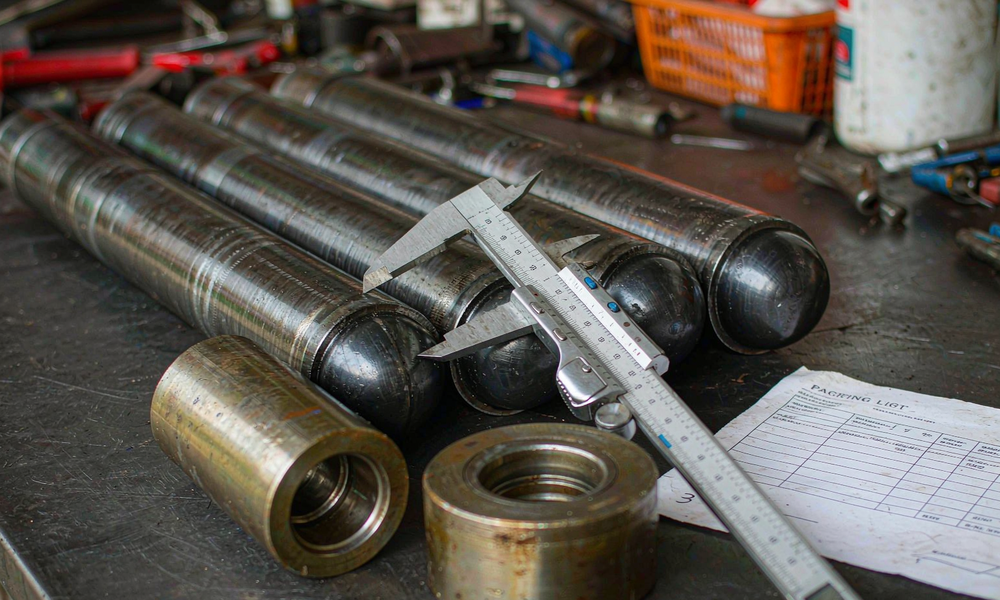
Some failures are not wear disputes at all. If a pin was quoted as 40Cr through-hardened to a stated hardness range and the delivered part is a softer steel, that is a specification breach and much easier to prove than a wear argument. The same applies to a bushing supplied with the wrong bore tolerance, or a track chain with the wrong link pitch.
So put the material grade and the key dimensions on the purchase order and on the packing list, and check them on arrival. A hardness tester and a caliper settle in ten minutes what a year of correspondence will not.
What should be in writing before you pay?
Five lines on the proforma invoice are worth more than a page of promise: the warranty period per part family, the trigger date, the exclusions, the remedy and who pays freight, and the claim notification window. If a supplier will not put those in writing, the warranty is a sales line rather than a term of sale.
Warranty also does not replace inspection. It is the remedy for the failure you could not see, not a substitute for checking what arrived — and the excavator parts that cause the most expensive downtime are usually the ones nobody opened the crate to check.
,000 went viral in Norway this autumn, and behind that video sits hard data: construction machinery exports reached US.373 billion in the first half of 2026, up 21.7 percent year on year according to the China Construction Machinery Association, with compact equipment and micro excavators driving the fastest growth.
What do the H1 2026 export numbers show?
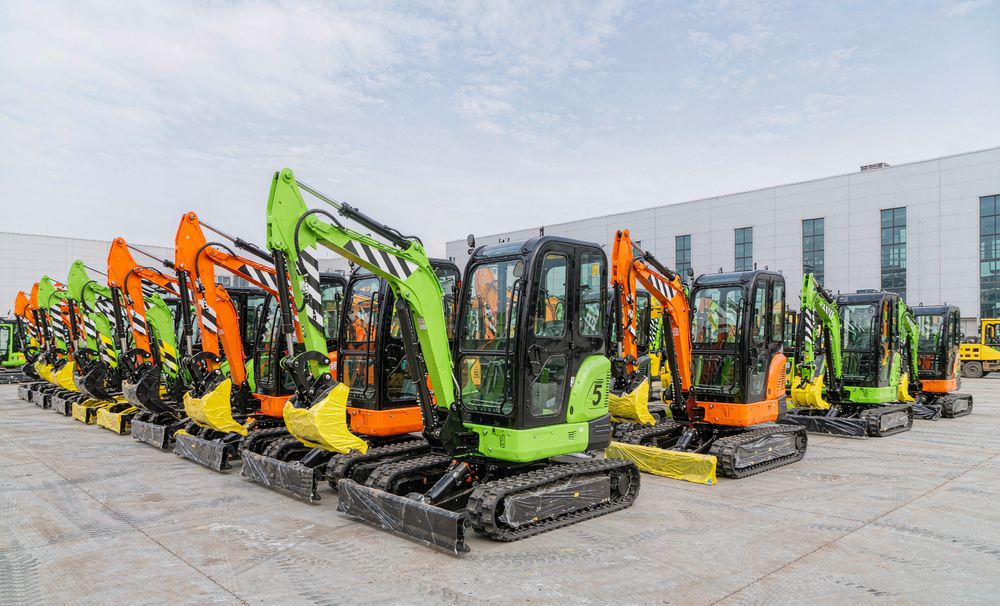
The headline figures reported by Chinese state media in late October, drawn from industry association statistics: excavator exports exceeded domestic sales for the eighth consecutive month, and cumulative excavator exports passed 85,000 units in the first seven months of 2026, up more than 31 percent year on year. Exports to the European Union reached US.626 billion, up 28.9 percent. Industry forecasts put China's compact construction machinery sales for 2026 above 180,000 units, with micro excavators making up more than 60 percent of that, roughly 110,000 machines. Trade commentary attributes the shift to buyers outside the traditional channel: private owners, small farms and tradespeople in Europe and South America discovering these machines through social media and cross-border e-commerce rather than dealer networks.
Why does this matter to parts buyers?
Because every one of those machines is a compact wear-parts consumer. A 1 to 3 tonne excavator still runs bucket pins and bushings, teeth, track rollers and sprockets; it just runs them at smaller envelopes and tighter tolerances than a 20 tonne machine. The parts market for this segment behaves differently from the large-machine market in three ways:
- Volumes are high and per-unit margins are thin, so parts supply consolidates around the same Shandong manufacturing clusters that build the machines.
- Many compact machines are sold direct to first-time owners, so sourcing spare parts is often the owner's first experience with the brand. A parts page that does not answer "which pin fits my machine" loses that buyer instantly.
- Fleet-scale after-sales networks, the normal channel for 20 tonne iron, barely exist for micro machines, which pushes owners toward online parts suppliers and pushes suppliers toward clear part-number discipline.
What does this mean for a Shandong parts maker?
JALE Excavator Parts is a Shandong manufacturer of excavator wear parts, and it sits inside the same industrial cluster that is shipping these machines. Unlike most parts suppliers, it also builds its own compact range, including the JALE08, JALE10-1 and JALE12 mini excavators, so the fit between a small machine and its pins, bushings and undercarriage parts is designed rather than reverse-engineered.
Do compact machines need different parts discipline?
The wear parts are the same families, but the failure pattern is not. A micro excavator's pins and bushings are physically smaller, so a few tenths of a millimetre of wear is a larger share of the original clearance, and the symptoms, play at the bucket ear, grease that will not hold, a knocking sound on direction change, arrive sooner relative to machine hours. Owners who would never inspect a 20 tonne machine weekly can and should walk around a 1 tonne machine weekly: two grease strokes per pin, a visual check that the bucket ears have not bell-mouthed, and a feel for slop at the linkage. The parts themselves are cheap; the deciding factor is knowing the pin diameter and ear spacing before ordering, because a 25 mm and a 30 mm pin look identical in a photo.
One honest caveat: no association figures have been published for compact-segment parts demand specifically, so any claim about its size would be guesswork. What the export data does establish is the installed base: over 100,000 micro and compact machines a year are entering service, largely with owners who have no dealer relationship. Their pins, bushings and teeth will be replaced on wear, on the owner's budget, from whichever supplier answers first with the right dimensions. That is the market segment forming behind the headline number, and it buys the same discipline this site has always sold: correct part numbers, honest steel grades, and hardware that fits the first time.
,000 went viral in Norway this autumn, and behind that video sits hard data: construction machinery exports reached US.373 billion in the first half of 2026, up 21.7 percent year on year according to the China Construction Machinery Association, with compact equipment and micro excavators driving the fastest growth.
What do the H1 2026 export numbers show?
The headline figures reported by Chinese state media in late October, drawn from industry association statistics: excavator exports exceeded domestic sales for the eighth consecutive month, and cumulative excavator exports passed 85,000 units in the first seven months of 2026, up more than 31 percent year on year. Exports to the European Union reached US.626 billion, up 28.9 percent. Industry forecasts put China's compact construction machinery sales for 2026 above 180,000 units, with micro excavators making up more than 60 percent of that, roughly 110,000 machines. Trade commentary attributes the shift to buyers outside the traditional channel: private owners, small farms and tradespeople in Europe and South America discovering these machines through social media and cross-border e-commerce rather than dealer networks.
Why does this matter to parts buyers?
Because every one of those machines is a compact wear-parts consumer. A 1 to 3 tonne excavator still runs bucket pins and bushings, teeth, track rollers and sprockets; it just runs them at smaller envelopes and tighter tolerances than a 20 tonne machine. The parts market for this segment behaves differently from the large-machine market in three ways:
- Volumes are high and per-unit margins are thin, so parts supply consolidates around the same Shandong manufacturing clusters that build the machines.
- Many compact machines are sold direct to first-time owners, so sourcing spare parts is often the owner's first experience with the brand. A parts page that does not answer "which pin fits my machine" loses that buyer instantly.
- Fleet-scale after-sales networks, the normal channel for 20 tonne iron, barely exist for micro machines, which pushes owners toward online parts suppliers and pushes suppliers toward clear part-number discipline.
What does this mean for a Shandong parts maker?
JALE Excavator Parts is a Shandong manufacturer of excavator wear parts, and it sits inside the same industrial cluster that is shipping these machines. Unlike most parts suppliers, it also builds its own compact range, including the JALE08 and JALE12 mini excavators, so the fit between a small machine and its pins, bushings and undercarriage parts is designed rather than reverse-engineered.
Do compact machines need different parts discipline?
The wear parts are the same families, but the failure pattern is not. A micro excavator's pins and bushings are physically smaller, so a few tenths of a millimetre of wear is a larger share of the original clearance, and the symptoms, play at the bucket ear, grease that will not hold, a knocking sound on direction change, arrive sooner relative to machine hours. Owners who would never inspect a 20 tonne machine weekly can and should walk around a 1 tonne machine weekly: two grease strokes per pin, a visual check that the bucket ears have not bell-mouthed, and a feel for slop at the linkage. The parts themselves are cheap; the deciding factor is knowing the pin diameter and ear spacing before ordering, because a 25 mm and a 30 mm pin look identical in a photo.
One honest caveat: no association figures have been published for compact-segment parts demand specifically, so any claim about its size would be guesswork. What the export data does establish is the installed base: over 100,000 micro and compact machines a year are entering service, largely with owners who have no dealer relationship. Their pins, bushings and teeth will be replaced on wear, on the owner's budget, from whichever supplier answers first with the right dimensions. That is the market segment forming behind the headline number, and it buys the same discipline this site has always sold: correct part numbers, honest steel grades, and hardware that fits the first time.
.31 billion, up 47%, and to Latin America at US.03 billion, up 60.7%. Longer routes make schedule reliability worth more than a few days of inland saving, which is why the port and the carrier matter more than the canal itself.
What it means for a parts order in practice
Production time does not move. Machining, heat treatment and packing run at the same pace whichever port the container leaves from. What a shorter inland leg changes is the buffer a supplier needs between finishing an order and handing it to the carrier, and at the margin how much working capital sits in a container on a truck.
For the buyer, the response is unchanged: plan stock against ocean transit plus clearance, not against the inland leg, and ask for the port and the sailing date rather than a single lead-time number. The parts themselves — bucket pins and bushings, track chains, bucket teeth — are priced by steel grade and machining hours, not by which river they floated down.
.90 billion, up 13.9%; to Europe, US.59 billion, up 4.2%. The growth is elsewhere: Africa at US.31 billion, up 47%, and Latin America at US.03 billion, up 60.7%.
That regional split matters for spare-parts planning. Mature markets in Europe are growing slowly, while the fastest-growing destinations are markets where machines work long hours in abrasive conditions and where the dealer and service network is thinner — exactly the profile that generates high wear-parts consumption. Trade-press analysis attributes a large share of African excavator demand to mining, and mining duty is brutal on undercarriage and on ground-engaging tools.
What should buyers and distributors plan for?
Stock the models that are actually in the field, not the models in the press release. On the evidence of the last few years that means the mainstream 20–30 tonne classes and the household names built around them — PC200 and PC300 class machines, the 320 and 330 class, the EX200 class, the R210 class and the DX225 class — plus the undercarriage groups that fit them. Those are the machines absorbing pins, bushings and track components in volume.
Do not build stock around electric-specific parts yet. At 0.6% penetration there is no volume aftermarket, and the common parts on those machines are the same parts you already carry.
Finally, plan for the replacement cycle, not just the new-machine market. Chinese trade-press analysis puts the domestic replacement cycle at roughly eight years, and with domestic sales now rising on the back of equipment replacement and emission-standard upgrades, a large second and third-owner population of machines is coming into its maintenance-heavy phase. That is the cohort that buys the most wear parts per machine — and it is a diesel cohort.
