
Hydraulic breaker wear parts are ordered by breaker model, but they will not work unless the breaker suits the carrier: as a general rule the hammer should weigh around 10–15 percent of the carrier's operating weight, and a 3–10 tonne carrier typically runs a 35–60 mm chisel. Then three numbers decide the order — chisel shank diameter, tool bushing bore, and retainer or through-bolt size.
Which breaker class fits which carrier?
Industry ranges overlap, so treat the following as a starting point and confirm against the breaker manufacturer's data sheet and the carrier's hydraulic chart:
- 3–6 t carrier: breaker around 100–300 kg, roughly 40–80 L/min, 100–160 bar, chisel around 40 mm.
- 5–12 t carrier: light to medium breaker, chisel around 35–60 mm.
- 10–15 t carrier: breaker around 400–800 kg, roughly 100–150 L/min, 150–180 bar, chisel around 45–65 mm.
Why does hydraulic flow matter more than hammer weight?
Because the weight only tells you whether the carrier can lift and hold the attachment. Flow and pressure decide whether the breaker can actually strike. Too little flow and the hammer stalls or runs at a fraction of its rated frequency with the same fuel burn. Too much flow overheats the oil and can damage valves. Before ordering any hydraulic part, check the carrier's auxiliary flow and relief pressure against the breaker's specified operating range — a seal kit rated for 160 bar in a 220-bar circuit will not last.
How do you size the chisel?
Measure the shank diameter and compare it with the nominal figure for the breaker model. Then look at the working end:
- The chisel is the most sacrificial part on the breaker because it takes every blow and all the abrasion.
- Replace when the working diameter has worn more than roughly 2 mm from nominal — a waisted chisel transfers energy poorly and puts side load into the bushing.
- In hard rock, expect a working life in the region of 300–500 operating hours; softer material runs longer.
- Tool type follows the job: moil point for hard rock and concrete, flat or wedge for stratified rock and trenching, blunt for secondary breaking where you want fragmentation rather than penetration.
What else wears, and in what order?
- Tool bushing (wear bush). It guides the chisel. Check the bore for a wear step and for ovality. A worn bushing lets the chisel strike off-axis, which loads the piston and shortens its life far more than the bushing costs.
- Retaining pins, bar and through-bolts. Measure these, do not just look at them. Undersized or lower-grade replacements bend under impact and let the tool move. Match the diameter and the thread pitch.
- Seal kits. Specify polyurethane and PTFE components rated for working temperatures above 110 °C and for pressure spikes. Cheap seals harden, then leak internally, dropping impact energy and heating the oil. The trigger to fit them is any work on the piston or chisel — do the seals at the same time.
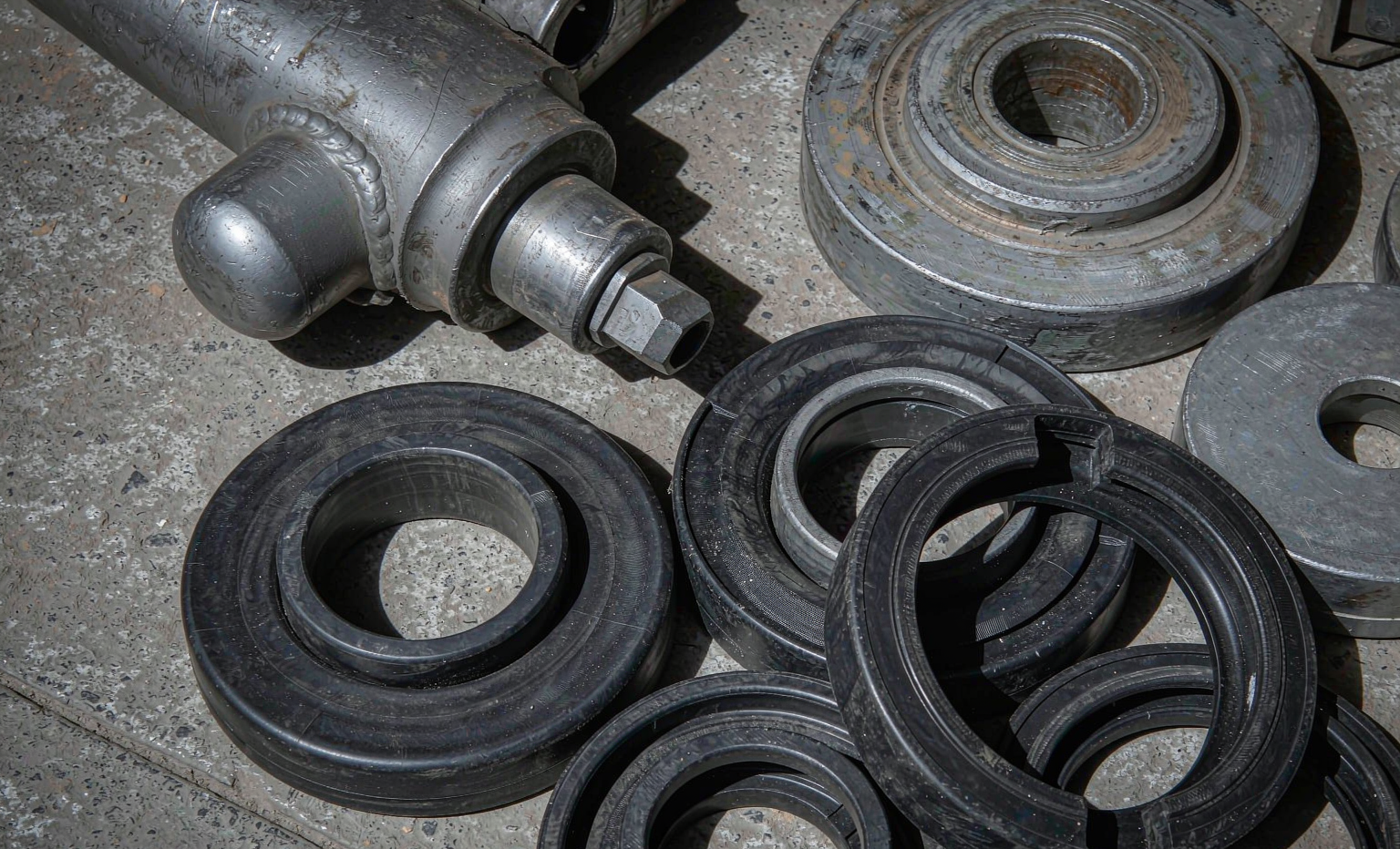
- Shock absorber or damper rubbers. These sit between the percussion body and the housing. Once they harden or crack, vibration goes straight into the boom and into the operator. Inspect them when you inspect the rest of the breaker.
The full list is under breaker parts and excavator breaker, with complete attachment references in hydraulic excavator breaker and excavator hammer.
What causes breaker parts to fail early?
- Blank firing. Striking nothing sends the full impact wave back through the piston and bushing. It is the single most destructive habit in breaker operation.
- Working off-axis. Prying with the chisel puts bending load into a component designed for axial load.
- Wrong nitrogen charge. Back-head pressure outside specification changes the blow energy and the load the piston sees.
- Oil viscosity and filtration. The breaker is the most contamination-sensitive hydraulic attachment on the machine. Clean oil of the right grade is cheaper than any part in this article.
- Return line back pressure. A restricted or undersized return line keeps pressure in the breaker and damages seals.
What should you send with an enquiry?
- Breaker make and model number.
- Chisel shank diameter and, if you have it, the length.
- Hammer weight and carrier make and model.
- Which parts you need — chisel, bushing, retaining bar, seal kit, dampers, bolts.
- A photograph of the old part next to a tape measure.
With those five items a supplier can confirm compatibility against the breaker model before shipping, rather than after the parts have travelled halfway around the world.