
To cross-reference an excavator part number, confirm three things before you place the order: the OEM number that is physically on the old part, the machine model and serial range that number belongs to, and the measured dimensions of the worn part you are replacing. When those three agree, any competent supplier can match the part. When they disagree, the OEM number is usually the out-of-date one, because it was copied from a parts book rather than read off the machine.
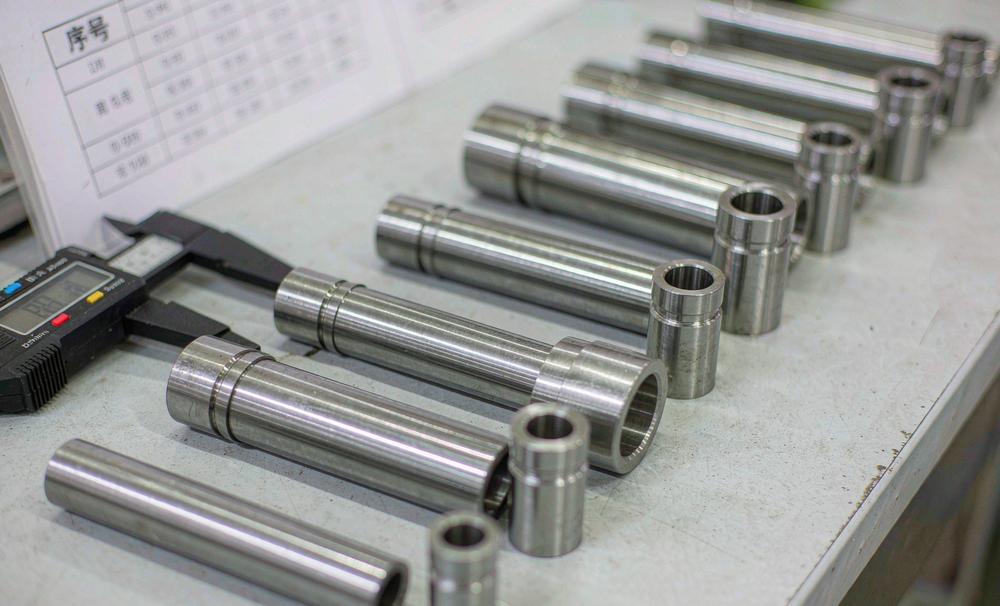
Why does one part number seem to fit so many different machines?
Excavator OEMs reuse components heavily. A bucket pin sized for one 20-tonne machine class is frequently the same pin used on several competing models of the same class, and the same forging appears in the books of different manufacturers under different numbers. That is why a pin can be sold as a Komatsu fit by one supplier, a Hitachi fit by another and a Hyundai fit by a third, and all three can be correct.
The practical consequence is that a cross-reference is a starting point, never a guarantee. Two numbers that interchanges on paper can differ in a hardening layer, a chamfer or a grease-drilling pattern that matters in service.
What is the correct order to identify a part?
- Read the number stamped or cast on the old part.
- Check that number against the machine serial range, not just the model.
- Measure the worn part, and measure against an unworn section or a new part.
- Only then ask a supplier to cross-reference.
1. Read the number off the part you are replacing
A number taken off the machine beats a number taken off a parts list, because parts lists get updated while machines get repaired with whatever was available. If the stamping is worn away, photograph the part from two angles and photograph the machine plate before you do anything else.
2. Confirm against the serial range, not just the model
A single machine designation can be built with different pins, bushings and linkages depending on production year, serial break, regional specification and attachment. A machine that has already been repaired may be carrying an aftermarket or replacement assembly that no longer matches the original book at all. Serial number, not model name, is what settles those cases.
3. Measure the part, not the hole it came from
Measure pin diameter on an unworn section, away from where the load has polished or stepped the surface. A pin that started at 60 mm and now measures 59.3 mm at the wear point has lost 0.7 mm of diameter, which is well past the point where most workshops would change it. Measuring the worn area alone tells you how bad the wear is, not what size to order.
Which measurements actually matter?
- Pin diameter, on an unworn section, plus the length overall and the length between any shoulders.
- Bushing bore and outside diameter, plus wall thickness and the position of the grease hole.
- Retaining detail: bolt holes, snap-ring grooves, chamfers, and whether the pin is drilled for a grease nipple or takes grease through the bushing.
- Material grade where it is known. 42CrMo and 20CrMnTi are both common pin and bushing grades in Chinese manufacture, typically induction hardened on the bearing surface; the grade affects wear life, not the fit.
When can you rely on a cross-reference, and when can you not?
Rely on it for standard wear parts where the fit is dimensional: plain excavator bucket pins, plain bucket bushings, teeth and retainers. Distrust it wherever the part carries a seal, a hydraulic function, an electrical connector or a mounting pattern that has to line up with three other components.
What should you send a supplier?
- The OEM number you read off the part, and any second number if the old part was already a replacement.
- Machine make, full model designation including suffixes, and the serial number.
- Measured dimensions, with a note of which measurement came from a worn surface.
- Two clear photographs of the old part and one of the machine plate.
- The quantity, and whether the parts are for stock or for a machine that is currently down.
With that package, a supplier can offer a correct match, a recommended alternative such as a 7V-6715 pattern bucket pin or a 1V-8439 pattern bucket pin, or tell you honestly that the numbers do not line up - which is far cheaper than discovering it after the parts land. Ordering a full set of bucket bushings at the same time as the pins is usually the right call, because a new pin running in a worn bore wears out quickly.