
Four measurements decide when an excavator undercarriage needs work: track sag, chain pitch elongation, sprocket tooth profile and roller or idler wear. Take them at the same service interval and write them down, because the number that matters is the trend rather than any single reading. A component two per cent past nominal tells you to plan; one that moved five per cent since the last check tells you to order today.
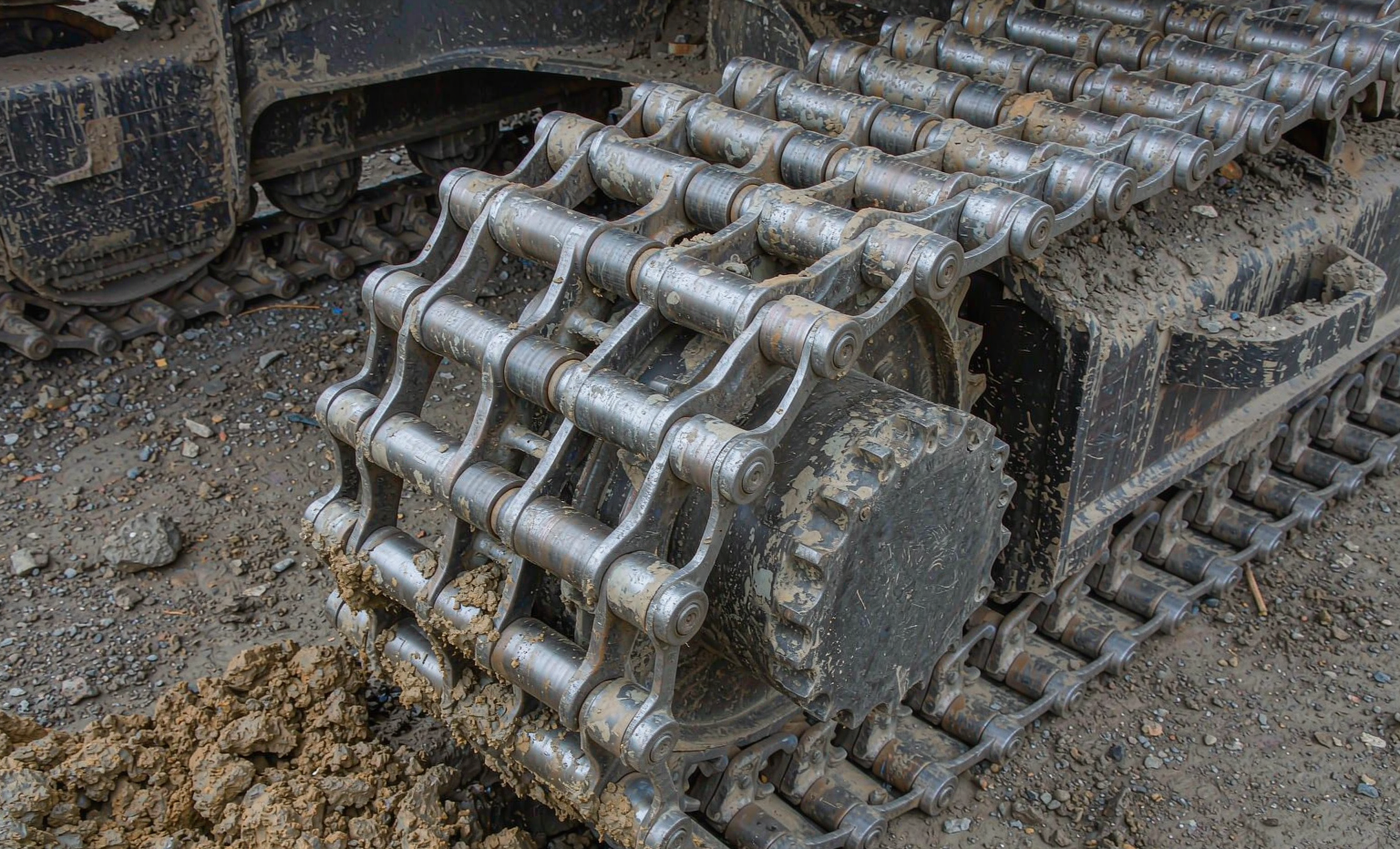
How do you measure track sag correctly?
Park the machine on firm, level ground, track it forward and back a few metres to let the chain settle, then measure the drop between a straight edge laid along the top of the chain in the middle of the top span and the chain itself. Or use the simpler workshop method: measure between the underside of the track frame and the top of the chain link at the mid-point.
The specification is written in the machine's own manual and varies with model, track type and shoe width, so use the book figure as the target. What does not vary is the consequence of getting it wrong:
- Too tight. Pin and bushing wear accelerates, sprocket teeth wear faster, and the chain carries preload it was never designed to hold. This is the more expensive mistake and the more common one, because operators tighten to stop a track climbing.
- Too loose. The chain slaps, wears the top of the rollers and the idler flanges, and can climb off the sprocket or the idler under load or in a turn.
How do you measure chain stretch?
Lay the chain out taut or measure on the machine across five link pitches at the bottom run, where the chain is under tension, and compare the measurement with the nominal figure for your chain — a 20-tonne class chain is commonly on a 190 mm pitch. Divide the five-pitch reading by five to get the working pitch.
As a general rule, a chain approaching roughly 3–4 per cent elongation is at the end of its serviceable life: the bushes no longer seat properly in the sprocket teeth, and the whole assembly is running on the tooth tips. That is the point at which continuing to run it costs more than replacing it, because the sprocket is being destroyed along with the chain.
How do you check the sprocket?
Look at the tooth profile first. New teeth have a broad, flat-topped land; a worn sprocket has teeth that are pointed, hooked or visibly stepped where the chain has climbed. Then measure tooth height against a new sprocket or the manufacturer's figure.
A sprocket wears against the chain, not on its own, which leads to the useful rule most fleets run on: a sprocket typically serves the first chain and should be replaced with the second. Fitting a new chain onto a worn sprocket is the classic way to waste a new chain.
What do you check on rollers and idlers?
- Leakage. An oil streak or wet patch around the roller end means the seal has failed. Once the oil is gone, the bearing fails quickly and the roller seizes.
- Rotation. Every roller should turn freely and evenly by hand with a bar. A seized roller skids, flattens the chain bushings and wears the link rails.
- Flange height and outside diameter. Measure against a new roller. A roller whose flanges are worn flat stops guiding the chain, which is when tracks start climbing.
- Idler alignment. Check for side wear on the guide flanges and for wear on one side of the chain only, which points at a misaligned idler or a bent track frame.
What is a bushing turn, and is it worth doing?
A bushing turn rotates the track bushes 180 degrees so the unworn side faces the sprocket teeth. Because the wear on a bush is concentrated on the drive side, turning them restores much of the original running surface and extends chain life substantially for the cost of a workshop job rather than a new chain.
It is worth doing at around half chain life, while the bushes still have material to give. Once the bushes are cracked, worn near the wall thickness limit, or the chain is already past the point where a new sprocket will not match it, a turn is wasted effort — the chain is done.
When is a full undercarriage rebuild due?
When several components pass their limits at the same time, replace them together. Common planning figures for normal duty are in the region of 3,000–4,000 hours for a track chain, 2,500–3,500 hours for rollers and idlers, and somewhat longer for shoes — but in rock or demolition, cut those figures substantially and inspect far more often.
Replacing one worn component against worn neighbours always shortens its life. Chains and sprockets, rollers and shoes should be renewed as a set. The components are listed under track chains, sprockets and undercarriage parts; if you are planning a rebuild, send the machine model, link count and current pitch measurement and the set can be quoted as a whole.