
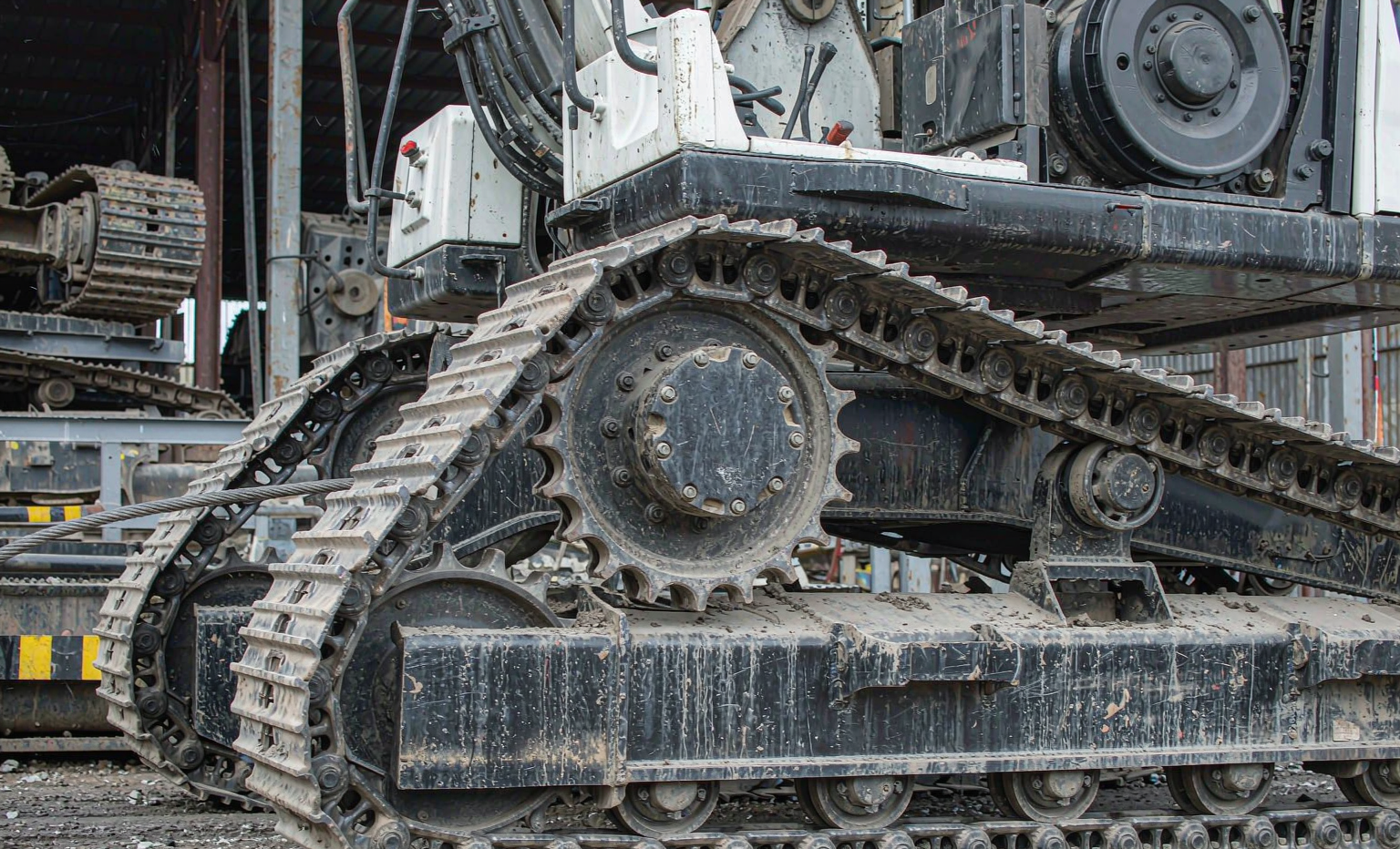
Undercarriage wear is the largest single maintenance cost on most tracked excavators. That is not a coincidence — the undercarriage is the one part of the machine that touches the ground continuously, under load, in abrasive material. What surprises many owners is how much of that wear is preventable with habits and checks that cost almost nothing.
Where the Wear Actually Happens
Six components carry the load and each fails at its own rate: the track chain (links and pins), the sprocket, the idler, the top and bottom rollers, the track shoes and the track tensioner. The key insight is that they wear as a system. A worn sprocket destroys a new chain in a fraction of its normal life, and a chain run at the wrong tension destroys rollers and idlers.
The Checks That Actually Move the Needle
Track tension
This is the highest-value check and the one most often skipped. Both too tight and too loose cause damage. Too tight preloads the pins, bushings, idler and rollers, and it wastes fuel. Too loose lets the chain ride up on the sprocket teeth, which wears the sprocket and can derail the chain in a turn. Measure tension the way your manual specifies — typically a sag measurement at a defined point under a defined load — and check it on the same ground conditions each time. Do it when the machine is on level, clean ground, not in mud, because mud adds weight to the chain and gives a false reading.
Sprocket and chain matching
When the chain is worn, the sprocket is usually worn to match it. Fitting a new chain to a worn sprocket accelerates chain wear dramatically, because the pitch no longer matches the tooth profile. The correct practice is to check both, and replace them together when either is at its limit. This is why running costs, not purchase price, should drive the decision when you buy.
Roller and idler clearance
Worn rollers create a rocking motion in the chain, which increases load on the pins and bushings. A quick check: with the machine raised and the chain slack, rock each roller and check for play. Also check for oil loss or seal damage — a leaking roller is a failed roller.
Operating Habits That Add Years
- Avoid spinning the tracks. Track spin is pure abrasion with no production value.
- Turn in wide arcs. Pivot turns on a hard surface grind the shoes and load the pins sideways.
- Do not travel long distances with the tracks in abrasive grit when the machine could be loaded and moved.
- Keep the undercarriage clean. Packed mud and rock keep tension artificially high and hold moisture that rusts pins.
- Match the shoe to the ground. Over-wide shoes on hard rock increase load and wear; too narrow shoes sink and slip.
- Avoid running one track up on a slope while turning — side loading is a common cause of link cracking.
The Cost Maths
| Practice | Cost | Effect on undercarriage life |
|---|---|---|
| Tension checked weekly | Minutes of labour | Prevents the accelerated wear that comes from both extremes |
| Chain and sprocket replaced together | Higher upfront parts cost | Avoids premature chain failure from pitch mismatch |
| Chain lubricated / sealed links maintained | Low | Slows pin and bushing wear substantially |
| Avoiding pivot turns | None — habit change | Reduces shoe and pin side loading |
| Undercarriage cleaned at shift end | Low | Removes abrasive grit and moisture |
| Roller and idler inspection at service | Low | Catches seal failures before they destroy the chain |
When to Replace Rather Than Keep Adjusting
Undercarriage components have wear limits stated as a percentage, measured at defined points — link height, bushing diameter, sprocket tooth thickness, roller diameter. Once a component passes its limit, the manufacturer's guidance is replacement, not continued adjustment. Running past the limit transfers the wear to the components next to it, which is why a neglected undercarriage tends to fail in groups rather than one part at a time.
Our guide on measuring excavator undercarriage wear covers how to take those measurements. For replacement chains, rollers, sprockets and idlers, the JALE roller and undercarriage range covers common machine classes, and bucket pins and bushings follow the same wear-limit logic at the working end.