
A counterfeit or low-grade excavator part almost always fails for one of three measurable reasons: the dimension is out of tolerance, the material is not the grade claimed, or the heat treatment is missing or too shallow. All three can be caught at goods-in with a caliper, a part-number check and a file test, before the part goes anywhere near a machine.
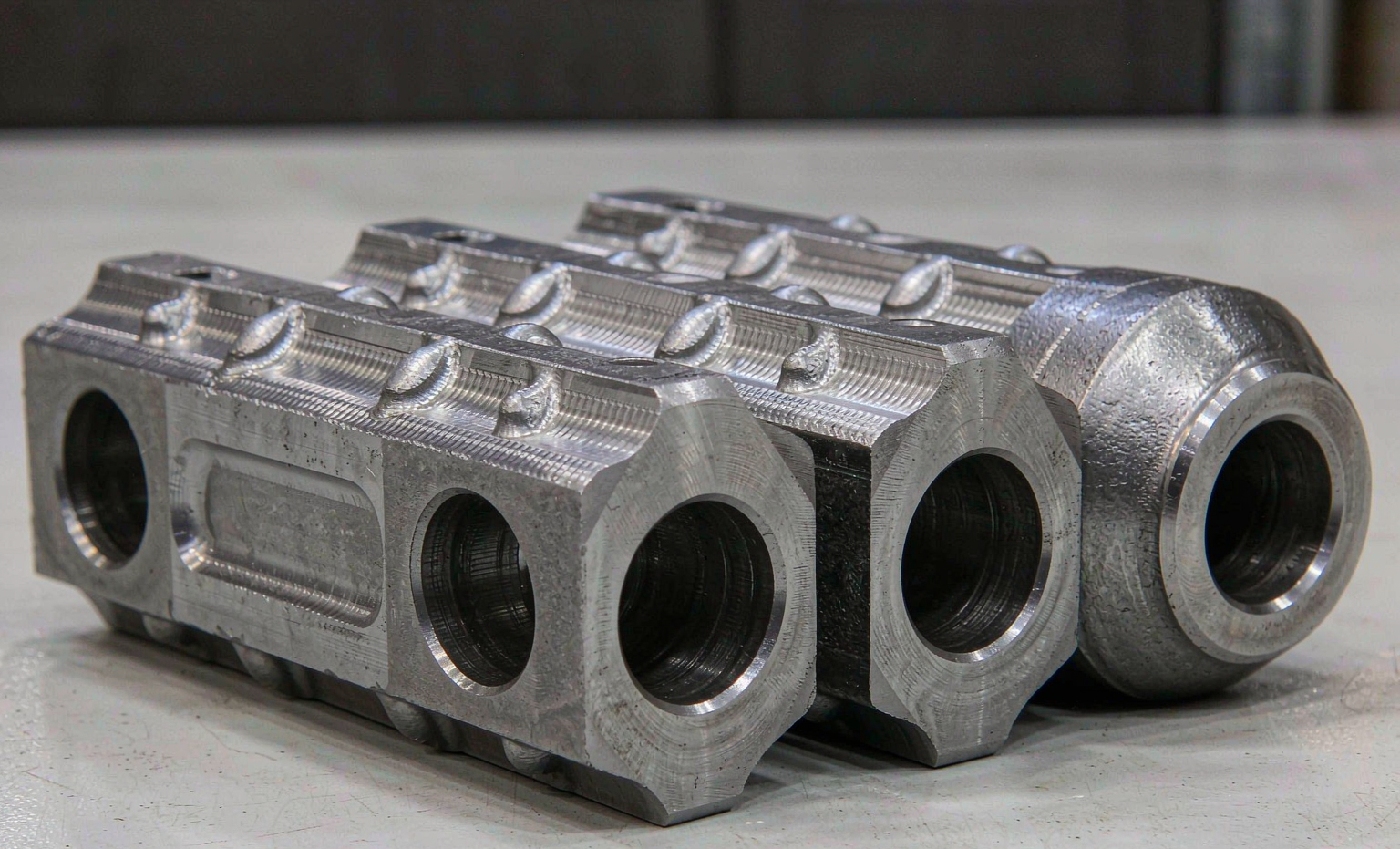
What actually goes wrong with a cheap part?
Low-grade pins and bushings rarely break on day one. They wear faster, and because they wear faster they take the bushing, the boss and sometimes the linkage with them. A pin that is under-size by a few hundredths of a millimetre will hammer in the bore; a bushing with uneven wall thickness goes oval early; a tooth made from the wrong alloy wears away faster and stops protecting an expensive adapter. The failure is invisible until something much larger has to be replaced.
How do I check dimensions at goods-in?
Use a caliper reading to 0.01 mm and measure more than one unit in a batch, because a supplier that holds tolerance holds it across the batch and not just on one sample. On pins, measure diameter at both ends and in the middle. On bushings, measure internal diameter, outside diameter and wall thickness at several points around the circumference. Compare against the drawing or the original part. If units vary from each other, the machining process is not under control.
How do I check material and heat treatment?
The quickest field test is a file. On a properly case-hardened pin the file should skate across the hardened surface rather than bite; on ordinary mild steel it will cut. That test will not tell you the exact grade, so also ask for a material certificate traceable to the batch. A supplier who can hold 40Cr or 42CrMo consistently can normally show you the certificate; one who cannot usually will not. If you have a portable hardness tester, a reading on the case will settle the question in seconds.
What are the visual warning signs?
- No part number or marking of any kind, on the part or on its packaging.
- Rough or inconsistent chamfers and burrs on machined edges.
- A surface finish that varies from unit to unit within the same batch.
- Grease holes or grooves in the wrong position, or missing entirely.
- Packaging that is generic, or inconsistent with the quantity ordered.
Why is a cheap pin expensive?
Do the arithmetic over the life of the joint, not over the price of the part. If a low-grade pin wears twice as fast it will be replaced twice as often, and it will also accelerate wear in the bushing it runs in. Once the boss itself is oval the repair moves from a pin-and-bushing change to line-boring, and the machine is out of production far longer than a scheduled swap. The cheapest pin is the one you fit once.
Does the same logic apply to buckets and undercarriage parts?
The same three checks apply to every wear part, but the tolerances and the damage differ. A bucket tooth that is not the grade claimed wears away faster and stops protecting the adapter, which moves the cost onto a much more expensive component. Undercarriage parts such as rollers, idlers and sprockets have their own wear limits, and a low-grade roller with a poorly sealed bearing will fail long before the tread is worn: the grease leaks out, water gets in, and the assembly seizes on the track frame. For those parts, ask what bearing and what seal the unit uses, not only what it measures.
How do I reduce the risk when buying?
Buy from a manufacturer that will state the steel grade and the heat treatment, not just the size. Ask for the certificate with the batch rather than a promise about it. Start with a small trial order and measure it before committing to volume. Comparing how suppliers present specification in bucket pin manufacturers and bushing manufacturers is instructive: the ones that publish grade and treatment are the ones worth quoting. Then apply the same checklist to the specific parts you use, such as bucket pins, bucket bushings and bucket teeth.