
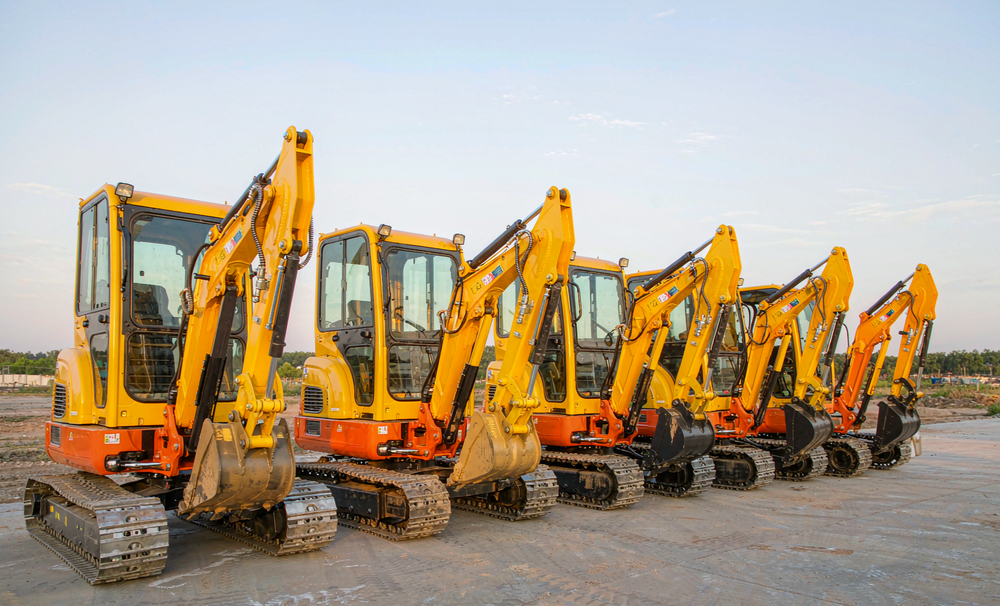
Small construction machinery and supporting enterprises in Jining, Shandong exported RMB 10.8 billion in the first three quarters of 2026, up 39% year on year, with micro excavators the standout product, according to a Xinhua report published on 23 October. For anyone selling excavator parts, that is not a headline about machines — it is a forward indicator of aftermarket demand, because every unit shipped creates a parts customer two or three years later.
What did the Xinhua report actually say?
The report put the number of small construction machinery and supporting enterprises in Jining at more than 500, and described micro excavators as the segment that has carried the city's export growth. It also showed the machinery at a plant in Wenshang County being commissioned for export, and set out the support behind the numbers: one-enterprise-one-policy assistance, export tax rebates, export credit insurance, organised participation in the Canton Fair and overseas trade shows, overseas warehouses, and cross-border e-commerce.
Read carefully, the figure covers small machinery and the supporting enterprises around it, not a single manufacturer. That matters for a parts supplier: the cluster is being measured as a supply chain, which is exactly how overseas buyers now buy from it.
Why does a machine export matter to a parts buyer?
A new excavator is a parts order that has not been placed yet. The first consumables — bucket teeth, cutting edges, pins and bushings — are consumed in proportion to hours worked, not to the age of the machine, and compact excavators often work harder in calendar terms than large ones because they are rented, shared or run on short utility jobs with frequent attachment changes.
That produces predictable demand. Machines exported in 2026 become the aftermarket of 2028 and 2029, and the buyer who supplied the first set of teeth usually gets the second.
What is different about parts for compact machines?
- Smaller pins and bushings. Compact machines run pins in a much smaller diameter range than a 20-tonne excavator, and the same joint is expected to survive thousands of cycles on a lighter structure.
- Attachment changes wear joints faster. A mini with a quick coupler and three attachments may open and close its bucket joint dozens of times a day.
- Rubber or narrow steel tracks. Undercarriage cost per hour is different, and track replacement is often a maintenance decision rather than a capital one.
- Small order quantities. A single machine needs one set of teeth, not a pallet, so packing and minimum order matter as much as price.
How does the overseas warehouse change the way parts are bought?
When a machine is sold through a warehouse or a cross-border channel, the buyer expects the spare to be available in days, not in a container six weeks later. That pushes parts orders towards smaller, more frequent shipments with a clear label on every box: machine model, part number, quantity. A supplier who cannot label to that standard becomes a supplier the warehouse will not stock.
It also rewards suppliers who publish a real parts list. A buyer who has to describe a pin by its dimensions alone will buy from whoever answers first with a part number that matches.
What does this mean for a Shandong parts manufacturer?
Proximity to a cluster like Jining is useful in a plain, unglamorous way: heat treatment, forging, machining and surface finishing capacity sit within a few hours' drive, so a short run of a non-standard pin is a scheduling question rather than a project. It is the same advantage that made Shandong a machinery province in the first place.
To be precise about what this report is and is not: this company is a parts manufacturer in Shandong, not one of the Jining enterprises counted in the RMB 10.8 billion, and none of that figure belongs to us. What we can say is that the machines leaving Shandong this year will need bucket pins and bucket bushings, and that supplying them is the business we are in.
What should a buyer do with this information?
If you are stocking for a compact fleet, look at your machine population rather than your last order. Count the units, note the models and the joint sizes, and build a stocking list from wear rates: teeth and pins first, then bushings, then undercarriage. A 39% rise in exports from one Chinese city will not change your workshop's week, but it does mean more compact machines in your market, and more of them looking for parts.