
On 15 October 2026 Sany's Campinas plant in Brazil handed over its first batch of locally assembled excavators, moving from line commissioning and sample builds into small-batch production and delivery. For parts buyers in South America the machine count matters less than the structure behind it: an OEM channel with local stock, local financing options and a local spare-parts warehouse.
That is a different competitive situation from the one importers have sold into for the past decade, and it is worth being precise about what changes and what does not.
What did Sany actually announce?
- The delivery ceremony took place at the Campinas factory on 15 October 2026, Brazilian local time.
- The plant has moved from production-line construction and sample assembly into small-batch production and customer delivery.
- Brazil's local-manufacturing policy environment — tax and financing support for domestic production — is the backdrop.
- Under regional trade agreements, output from Campinas can serve several South American markets, not Brazil alone.
- Campinas is intended to become the company's Latin American centre for production, spare parts and after-sales.
- The company cites local procurement, local assembly and local warehousing as shortening machine lead times, and says the local spare-parts warehouse will keep expanding.
No unit numbers, model breakdown or local-content percentage were published with the announcement. Treat any figure quoted elsewhere as someone's estimate.
Does local assembly mean locally made components?
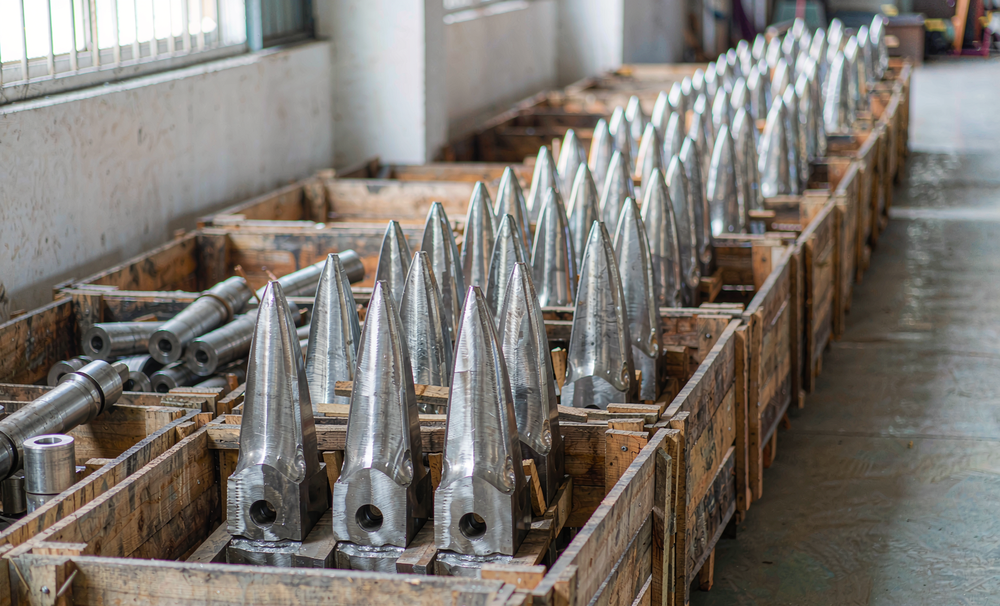
No, and this is the part buyers get wrong. Assembly is not component manufacture. Bucket teeth, bushings, cutting edges and seal kits are still overwhelmingly imported into South America; what changes is where the OEM-branded box sits before it is sold.
The realistic short-term effect is in the dealer channel: OEM spares clear faster inside Brazil and the dealer can afford to carry more depth. An independent buyer importing a container still waits for the container.
What changes for an independent parts buyer?
The lead-time benchmark moves against you
If a dealer can put a bushing on a counter in three days, “five weeks ex-China” stops being an acceptable answer for fast-moving items. The response is stock depth on predictable wear items, planned against the maintenance calendar, not a lower price on a part nobody can wait for.
Local OEM parts do not automatically get cheaper
Local stock carries local cost — warehousing, tax, financing. Localisation tends to make OEM supply faster and more reliable, not cheaper. Price pressure on the aftermarket comes from other aftermarket suppliers, not from the OEM plant.
Model coverage becomes a real question
Machines assembled from kits can differ from imported complete units in small details that never appear in a brochure. The parts book number is the only reliable key; the model name is not. Buyers already solve this the same way — serial number and part number, in writing.
Currency exposure shifts, it does not disappear
Local production lets a dealer buy in local currency. An importer still carries the dollar exposure plus freight, which is why a long sea route to Santos makes ordering late expensive twice: once in freight, once in downtime.
What does this look like in three to five years?
Localisation usually follows a sequence. Assembly first, then the high-volume, simple parts: teeth, pins, pins, filters. Low-volume, high-variety parts — a boom pin for one model, a seal kit for an older series — stay imported, because the tooling cost never pays back at the volume a single market generates.
That is the honest split to plan around. Expect local competition on teeth and edges. Expect the long tail of model-specific pins, bushings and undercarriage to keep coming from China, and expect the buyer who can supply that tail accurately to keep the account.
What should a South American buyer watch now?
- Which models are assembled at Campinas, and from which serial prefix.
- Whether the local parts catalogue covers your model year, not just the current one.
- Whether the local warehouse actually stocks the wear items you consume every month.
- Whether your own stock plan covers the long tail ahead of the season, rather than after the first failure.
Frequently asked questions
Will local assembly push aftermarket prices down?
Not directly. It raises the service standard the aftermarket has to meet. Sellers who compete only on price against a local OEM warehouse tend to lose on lead time, not on cost.
Are parts for a locally assembled machine different from an imported one?
Often in small ways. Confirm by part number against the machine's own parts book, and send the serial number with the enquiry.
Does this affect buyers outside South America?
Only as a signal. It is one more large OEM moving assembly closer to the customer. The parts that wear out still have to be made somewhere, and that somewhere is still mostly China.