
The ten hydraulic excavator parts worth holding on the shelf are the ones that stop a machine earning: bucket teeth, pins and bushings, H-links, track shoes and bolts, track chains, sprockets, track rollers, idlers, breaker consumables, and hydraulic seals. Everything else can wait for an order. The test for each one is the same — how many hours between failures, and how many days it takes to source a replacement.
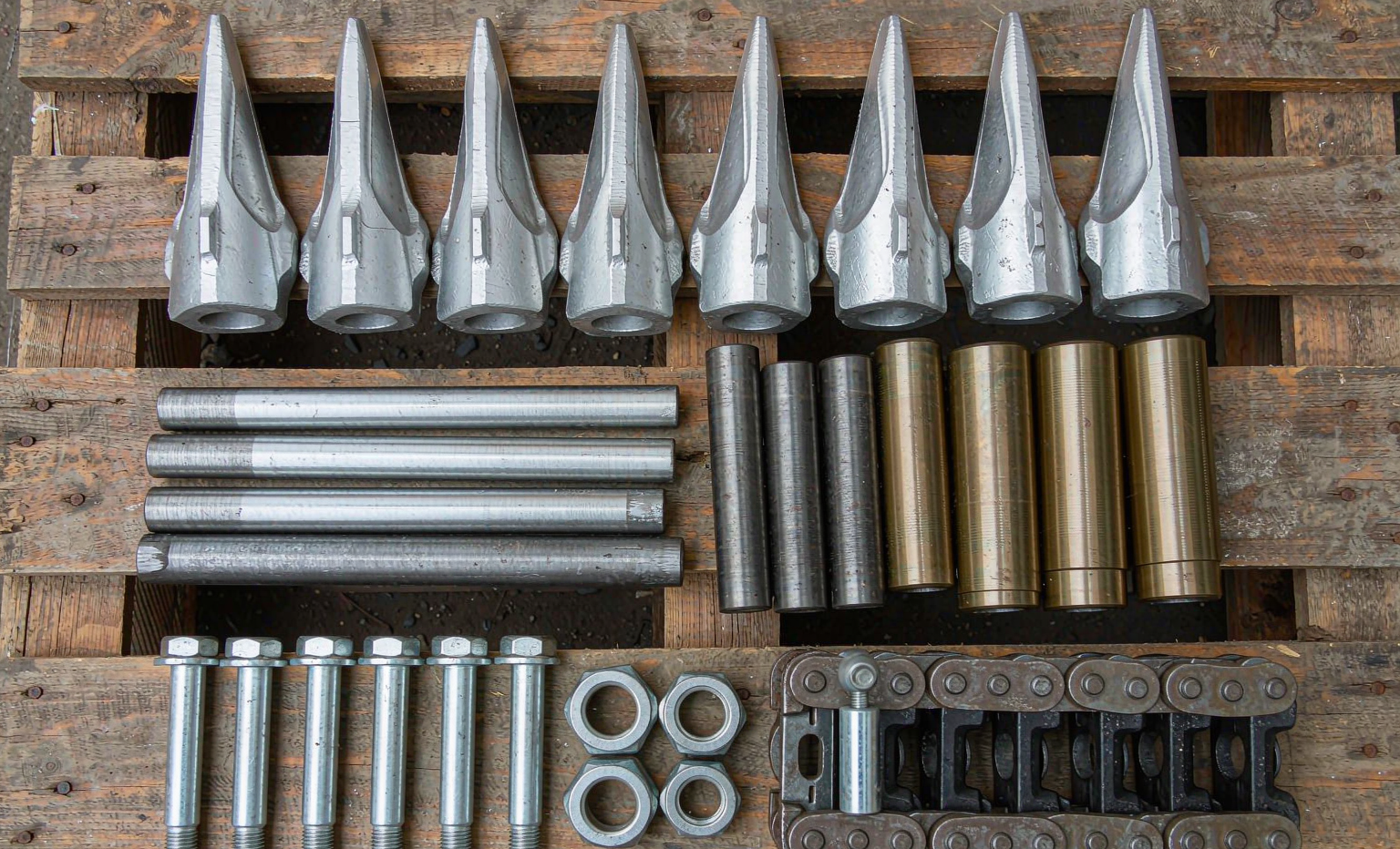
The ten parts, and why each one earns shelf space
- Bucket teeth. The fastest-moving part on any excavator. In abrasive rock a tooth is a days-to-weeks item, and a missing tooth takes the adapter with it. Stock at least the two profile families you see most, in the correct adapter size.
- Bucket pins and bushings. The joint that destroys bosses when it is ignored. Hold common diameters rather than a single SKU, and hold them as matched pairs so a repair is not held up waiting for the other half.
- H-link and its pins. The link that ties the bucket to the stick. When its bores are gone the bucket hangs loose and the stick suffers; it is a small part that causes disproportionate downtime.
- Track shoes and track bolts. Ground-engaging and constantly abraded. Bolts shear and shoes crack, and both are cheap to stock next to the cost of leaving a machine parked.
- Track chains. The largest single undercarriage line item. Not a part to hold deep in every size, but the two or three machine classes you actually service are worth one set each.
- Sprockets. They wear fastest against a stretched chain, and a hooked sprocket will destroy a new chain in short order. Keep them paired with the chains you stock.
- Track rollers and carrier rollers. Fail by seal leak, flat spot or flange wear. Rollers are consumed in sets and in predictable numbers, which makes them easy to plan.
- Front idlers. Wear on the guide flange causes the chain to track off centre and climb. One idler per machine class, held against the day it is needed.
- Breaker consumables — chisels, front bushings, seal kits. If you supply breakers, these are the parts that come back every time. They fail on hours, not on condition, so demand is forecastable.
- Hydraulic seals and cylinder kits. The seal is never the expensive part; the labour and the lost shift are. A compact stock of the common cylinder sizes removes the argument about waiting for a kit.
How deep should the stock actually be?
Depth beats breadth. It is better to hold four of the pin sizes you genuinely see each month than one of every pin size in the catalogue. Sort your parts into three tiers by how often they leave the shelf, and set reorder points from the consumption you have actually recorded rather than from a supplier's recommended list.
The exception is matched components. Pins and bushings, chain and sprocket, tooth and adapter — if you stock one and not the other, you have not removed the downtime, you have moved it.
Which measurements belong on the machine file?
For every machine in the fleet, record these once and the ordering process stops being a conversation:
- Tooth adapter family and locking pin diameter, or the OEM tooth part number.
- Bucket pin diameters at each joint, with lengths and groove position.
- Bushing bore and outside diameter at each joint.
- Track chain pitch and link count per side.
- Track shoe width, bolt size and bolt count per shoe.
- Sprocket tooth count and part number.
- Roller and idler part numbers, and how many of each per side.
What does not stocking actually cost?
The comparison is not the price of the part against the price of nothing. It is the price of the part against a parked machine, a hired replacement, a missed programme and a customer who now knows your shelf was empty. That comparison usually resolves itself in favour of a modest stock within a single failure.
The parts above are listed in the bucket teeth, track chain and breaker parts sections of the catalogue. If you are setting up a first stock list, send your machine models and the OEM part numbers you use most and ask for a consolidated quotation rather than ordering line by line.