
On 15 October 2026 the UK stopped collecting anti-dumping and countervailing duty on tracked excavators from one Chinese exporter, and only that exporter. Liebherr Machinery (Dalian) Co., Ltd. now enters at a 0% trade remedy rate under additional code 8A77, while every other Chinese producer of the same machines keeps paying duty.
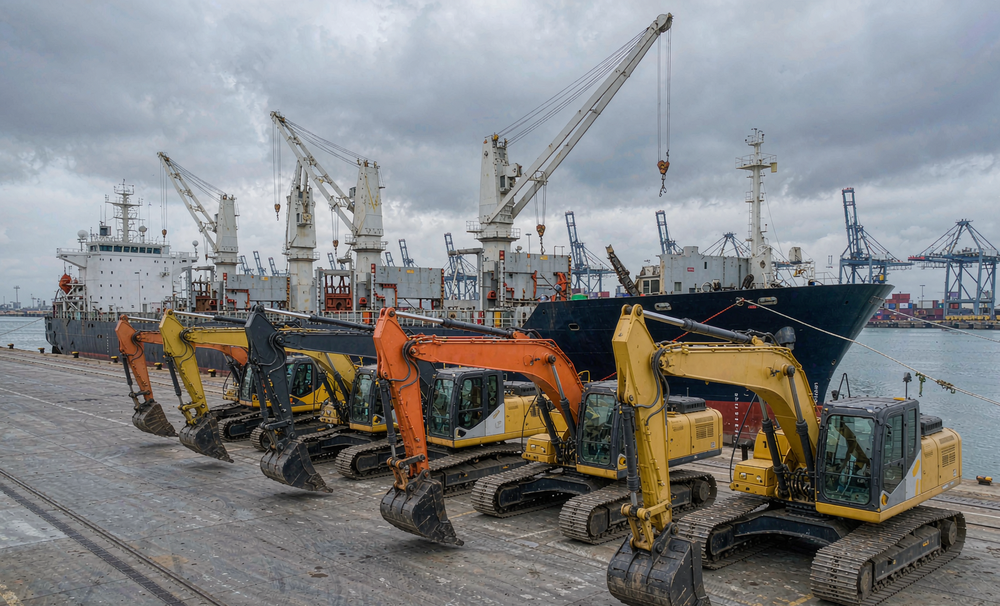
What exactly changed?
Two public notices were published on 15 October 2026 and took effect the same day. Trade remedies notice 2026/30 suspends the anti-dumping duty that had applied since notice 2025/10. Notice 2026/29 suspends the countervailing duty from notice 2025/114. Both original measures have run since 14 May 2025 and are scheduled to expire on 14 May 2030, with rates set per exporter rather than as one flat figure.
The suspension is not a repeal. It lasts only until the new exporter review opened on the same day concludes or is terminated. If the review ends with a company-specific rate, duty collection resumes at whatever that rate turns out to be.
Which machines are covered?
Self-propelled tracked excavators with a 360-degree revolving superstructure, operating weight from 11,000 kg up to but not including 80,000 kg, classified under commodity code 8429 5210 00. Machines under 11 tonnes and machines of 80 tonnes and above were never inside the measure and are unaffected by any of this.
Why would one company get a suspension?
This is the new exporter review mechanism doing its job. A company that did not ship the goods to the UK during the original investigation period normally inherits the residual rate applied to all other exporters. A new exporter review lets it argue for a rate based on its own costs and prices. The UK authority accepted that the legal tests were met, so collection is paused while the review runs. It is a procedural step for one producer, not a change of policy towards Chinese excavators.
What does an importer have to do at the border?
Declare the right additional code. The same machine, under the same commodity code, carries a different duty depending on who made it, so the customs entry has to name the producer rather than the brand on the decal. Liebherr Dalian is the clearest example of why: a German brand, a Chinese factory, and a duty position that changed overnight.
What is the actual trap in this story?
The registration. In March 2026 the UK opened an absorption review to test whether exporters were absorbing the duty instead of raising prices, and since July 2026 imports of these excavators have been registered. Registration means that if the review finds absorption, an increased rate can be applied back to the registration date. An importer who assumed the duty position was settled can therefore be assessed later, on machines already sold and delivered. That is a cash exposure, not a paperwork point, and it is worth keeping entry records for every unit imported since July 2026.
That retroactive risk is a bigger commercial variable than one exporter's suspension. A suspension saves money on the next container. A retroactive increase re-prices the last three.
Does any of this touch excavator parts?
No. The measures cover complete machines under 8429 5210 00. Buckets, grabs, quick couplers and other excavator parts are classified separately, under 8431 41 and 8431 49, and sit outside both notices. Parts are not caught by the machine duty, and a suspension for one machine exporter does not change the parts position either way. Buyers bringing bucket pins, bucket bushings, undercarriage components or bucket teeth into the UK are dealing with a different line of the tariff and a different set of questions: dimensions, material grade and fit, not trade remedies.
What should a buyer watch from here?
- Whether the new exporter review ends in a company-specific rate, and what that rate is.
- The outcome of the absorption review, because that is the one that can reach backwards.
- Whether other exporters apply for the same treatment, which would widen the price gap between brands at the UK border.
- Whether any change follows for attachments and wear parts. None has been proposed.
Machines getting cheaper at the border do eventually show up as a larger installed population, and a larger population buys more pins, bushings, teeth and undercarriage two to three years later. That lag is the reason a parts supplier reads machine-duty news at all. For a buyer, the practical reading is narrower: confirm the producer and the additional code on every entry, keep the records, and do not assume a headline about one factory applies to the container you are landing.