Excavator parts Colombia: altitude, coastal salt and the llanos abrasion that decides your spares list
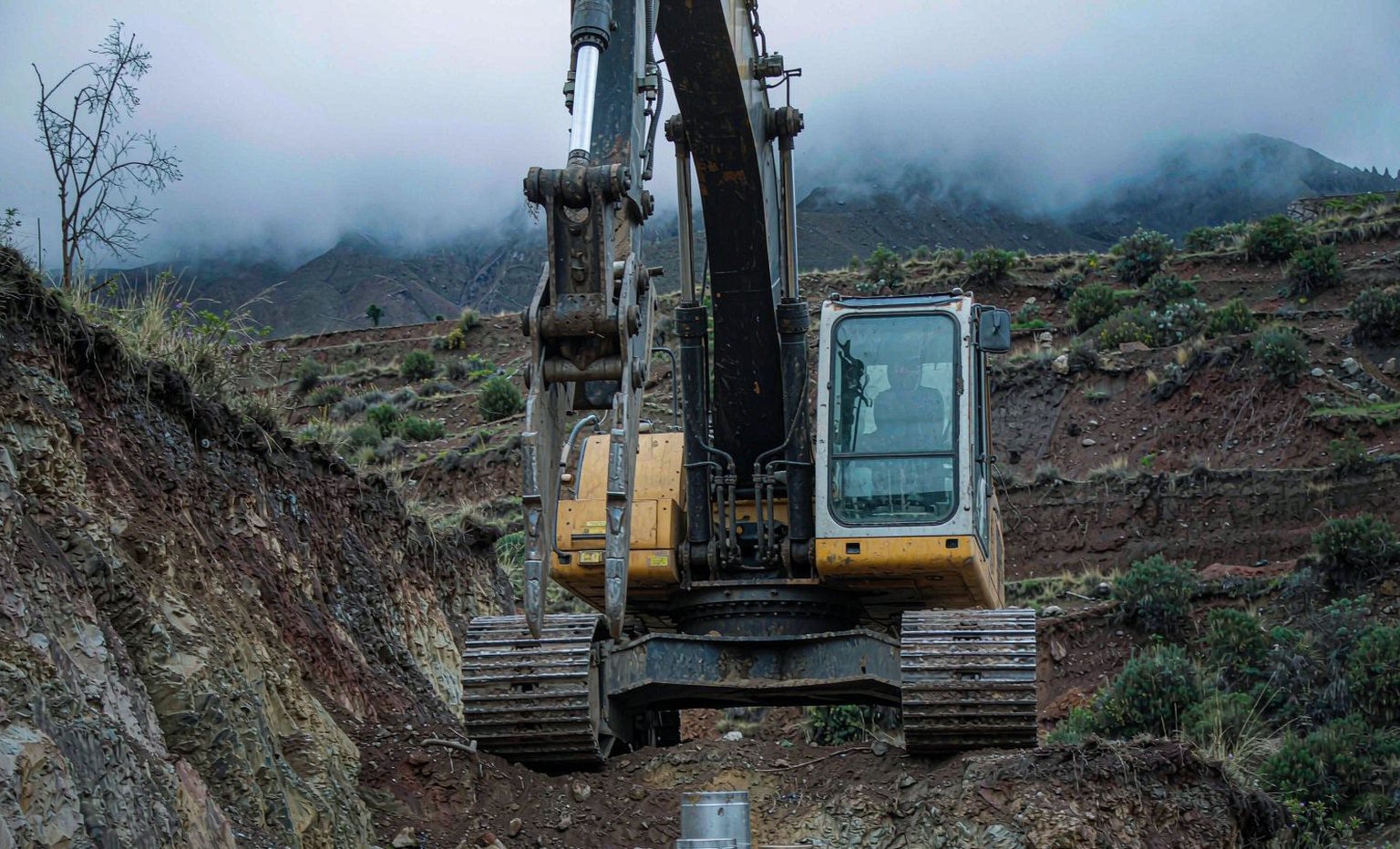
Buying excavator parts Colombia is not one problem, it is at least three. A machine working a cut slope above two thousand metres near Bogota lives in a different wear regime from one on a limestone job outside Barranquilla, and both are different again from a unit on the eastern plains where the soil is abrasive and the water table is high. The same bucket pin that lasts a full season in one place will oval a bushing in the other. This guide sets out what changes with the terrain, how to build a spares list from measured wear rather than from a catalogue page, and what to have ready on the import side so that a planned rebuild does not turn into a three-month wait.
Three wear climates in one country
Colombia compresses a lot of operating environment into one customs territory. The Andean departments sit between roughly one thousand and three thousand metres, with cold nights, intense ultraviolet light and volcanic soils. The Caribbean coast is hot, humid and salt-laden. The eastern plains are flat, wet for part of the year, and covered in soils with a high content of hard silica particles. Add the Pacific coast, where rainfall is extreme, and you have four different mechanisms attacking the same part numbers.
The practical consequence is that a single national spares policy for a mixed fleet will be wrong for most of the machines in it. The fleet should be grouped by site, not by model, and the consumption history for pins, bushings, seals and GET should be kept per group.
Altitude, cold nights and what they do to seals
At altitude the air is thinner and drier, and the daily temperature swing is large. Two things follow. First, the hydraulic system breathes more volume on every cycle of the reservoir as the temperature moves, so a breather that is marginal at sea level will pull damp air in overnight and condense it in the tank. Water in the oil degrades the additive package and attacks the bronze in bushings. Second, elastomers in seals and wiper rings harden faster under high ultraviolet exposure and repeated thermal cycling, so external seals crack before they wear.
In practice the altitude fleet needs shorter hydraulic oil sampling intervals, a breather check at every service, and seals bought in the correct compound rather than whatever is cheapest. A standard nitrile wiper is fine in a temperate workshop and marginal on a high-altitude site with strong sun.
The Caribbean coast: salt, humidity and a corrosion clock
On the coast the dominant mechanism is corrosion, not abrasion. Pins rust in the bore where grease has washed out, and a rusted pin seizes in the bushing and then spins, which destroys both parts. Plated pins help, but the plating is only as good as its thickness and adhesion, and a thin decorative plate will fail at the first stone strike. Ask for the coating specification, not the colour.
The other coastal issue is that condensation forms inside the hydraulic tank every night. A machine that works one shift a day and sits overnight in humid air will accumulate water in the oil faster than one that runs continuously. Water separators and regular draining of the tank low point matter more here than anywhere else in the country.
Llanos abrasion: quartz, water and the pins that go first
On the plains, the soil contains a high proportion of hard silica. Silica is harder than the hardened surface of most pins and bushings, so once it gets into a joint it grinds rather than polishes. The entry point is almost always the seal: a worn wiper lets grit past, the grit mixes with grease and becomes a lapping paste, and the bushing bore goes oval from the inside out.
That makes the wiper and the grease interval the two cheapest controls on the whole machine. A joint that is greased on schedule with the correct grease, and whose wiper is replaced before it loses its lip, will outlast an identical joint that is greased when someone remembers. In abrasive ground, doubling the grease frequency costs far less than one bucket rebuild.
Building an excavator parts Colombia list from the hour meter, not a catalogue
The most common mistake in a mixed fleet is ordering to a percentage of the machine count. Instead, take the last twelve months of workshop records and calculate consumption per thousand machine hours for each wear item, per site group. Pins, bushings, GET, undercarriage components and seal kits should each have their own figure.
That single table changes the buying decision. A site with high pin consumption but low GET consumption is telling you the joints are ingesting grit, which is a maintenance problem, not a parts problem. A site where GET wears fast but pins last is telling you the ground is abrasive at the cutting edge but the joints are sealed properly.
Pin and bushing life: measuring instead of guessing
Replace a pin when its diameter at the wear band has dropped measurably against the unworn end, and replace the bushing when the bore has gone oval beyond the OEM limit. The measurement that matters is the clearance between the two, taken with a micrometer on the pin and a bore gauge in the bush, at the same angular position. A joint with excessive clearance hammers itself; the impact load rises sharply once the clearance opens, so wear accelerates instead of progressing linearly.
Measuring is also how you avoid the classic false economy of fitting new pins into worn bushings. A new pin in an oval bore has line contact instead of area contact and will fail early, and the customer will blame the pin. The bucket pin range and the bucket bushing range are supplied to matched tolerances so that both can be replaced together, which is the only way the clearances come back to nominal.
Hydraulic seals in a humid market: storage is half the problem
Seals have a shelf life and humidity shortens it. A seal kit that has sat in an unconditioned warehouse for two years in Barranquilla is not the same product as one that has been stored cool and dry. Buy in quantities that turn over within a year, keep the bags sealed until fitting, and reject any kit whose elastomer has visibly hardened or whose bags have condensation inside.
Fitting practice matters as much as storage. A lip seal that is dragged over a sharp keyway or a threaded section will be cut and will leak, and no amount of correct compound will save it. Tape the threads and lubricate the seal with the system fluid before assembly.
Undercarriage: the cheapest check that saves the most money
Track chains, rollers, idlers and sprockets are the largest single maintenance cost on a crawler excavator, and they are the easiest to measure. Track pitch elongation against a new chain, roller flange diameter, bushing wear on the chain, and sprocket tooth profile together tell you how much life is left and, more importantly, whether the components are wearing as a set. A new chain on worn sprockets will destroy itself, and a new sprocket on a stretched chain will do the same.
Measure quarterly and plot the trend. A sudden change in wear rate usually means a change in ground conditions, a change in operator, or a lubrication failure, and all three are cheaper to fix than a chain.
Import paperwork that decides your lead time
Parts that arrive at the port without the right documents sit there. For a shipment into Colombia, the commercial invoice, the packing list, the certificate of origin and the transport document all have to agree on description, quantity and weight, and the importer needs its tax registration in order before the shipment lands. The tariff classification of a steel pin and a hydraulic seal kit is not the same, and a supplier who ships them under one description creates a problem at clearance.
The practical rule is to ask for the commercial invoice in draft before the goods leave, check the descriptions line by line against what you ordered, and confirm the HS codes with your customs broker while there is still time to change them. Freight by sea is cheap and slow; air is fast and expensive. For a planned rebuild, sea freight with a correct invoice beats air freight with a corrected one, because the delay is never the flight.
Matching a supplier to a Colombian workshop
A workshop that rebuilds a joint needs the pin, the bushing, the seals and the retaining hardware in one delivery, matched. A supplier who can only ship one line item at a time turns a two-day job into three separate waits. Ask three questions of any supplier: can you supply the pin and the bushing to a matched clearance, can you supply the seal kit for the same joint, and can you consolidate them on one invoice with consistent descriptions.
The second question is technical support. When a pin fails early, someone has to establish whether the cause was the pin, the bore or the grease interval. A supplier who asks for the measurements before answering is more useful than one who ships a replacement immediately.
What belongs in a first excavator parts Colombia order
A first order to a new market should be small, complete for one machine, and heavy on the parts that stop the machine: pins and bushings for the bucket and linkage, a seal kit for the breaker if one is fitted, a set of GET for the prevailing ground, and the undercarriage fasteners that are always missing when a roller is changed. That order proves the supplier on fit, paperwork and packing at low risk.
Do not open with a container of slow-moving stock. The parts that matter are the ones that stop a machine, and those are identifiable from twelve months of workshop records.
A 12-month stock plan that survives a bad season
Split the year into the wet and dry seasons your sites actually experience, because consumption is not flat. Abrasive wear in the llanos concentrates in the dry months when the ground is hard and dusty; coastal corrosion is worse in the wet season. Order on a three-month rolling forecast built from the previous year's consumption for the same quarter, with a safety stock for the two or three items whose failure stops a machine outright.
Then measure again. The plan is only as good as the record behind it, and the record is only as good as the person who writes down the pin diameter when it comes out. Colombia rewards a fleet that measures: the country will wear out any part you fit, but it wears out an unmeasured part much faster.
Regional notes worth reading alongside this
Our Chile notes describe a desert-and-coast split that has some structural similarities to the Colombian profile, with altitude and salt treated separately. The Australia notes cover the abrasive extreme, where ironstone does to a bucket what silica does in the llanos. If bushings are your current problem rather than pins, the notes on oval bushing wear explain the load path that causes it, and the undercarriage measurement guide covers the checks that belong in the same quarterly inspection.
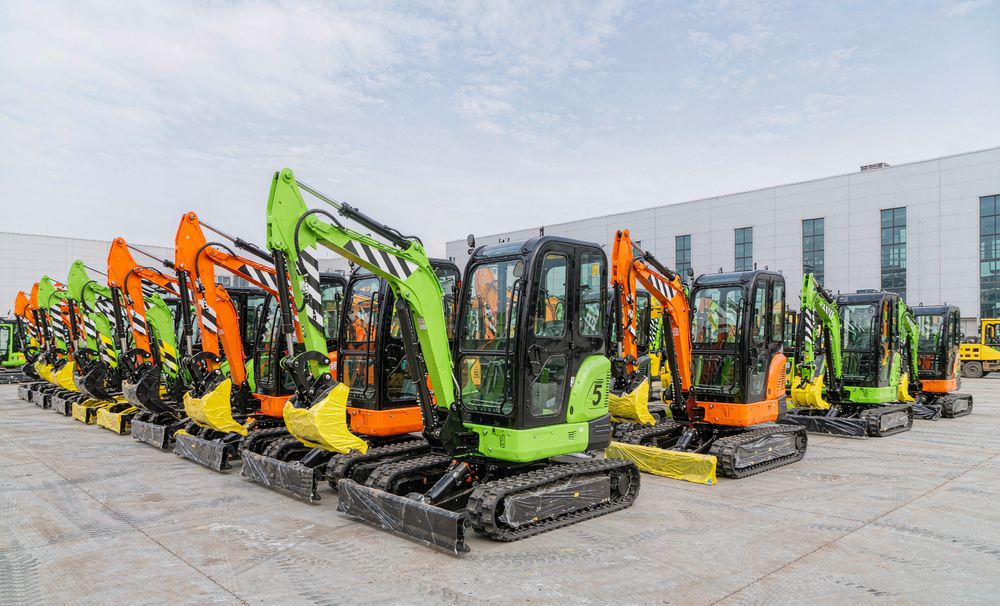
,000 went viral in Norway this autumn, and behind that video sits hard data: construction machinery exports reached US.373 billion in the first half of 2026, up 21.7 percent year on year according to the China Construction Machinery Association, with compact equipment and micro excavators driving the fastest growth.
What do the H1 2026 export numbers show?
The headline figures reported by Chinese state media in late October, drawn from industry association statistics: excavator exports exceeded domestic sales for the eighth consecutive month, and cumulative excavator exports passed 85,000 units in the first seven months of 2026, up more than 31 percent year on year. Exports to the European Union reached US.626 billion, up 28.9 percent. Industry forecasts put China's compact construction machinery sales for 2026 above 180,000 units, with micro excavators making up more than 60 percent of that, roughly 110,000 machines. Trade commentary attributes the shift to buyers outside the traditional channel: private owners, small farms and tradespeople in Europe and South America discovering these machines through social media and cross-border e-commerce rather than dealer networks.
Why does this matter to parts buyers?
Because every one of those machines is a compact wear-parts consumer. A 1 to 3 tonne excavator still runs bucket pins and bushings, teeth, track rollers and sprockets; it just runs them at smaller envelopes and tighter tolerances than a 20 tonne machine. The parts market for this segment behaves differently from the large-machine market in three ways:
- Volumes are high and per-unit margins are thin, so parts supply consolidates around the same Shandong manufacturing clusters that build the machines.
- Many compact machines are sold direct to first-time owners, so sourcing spare parts is often the owner's first experience with the brand. A parts page that does not answer "which pin fits my machine" loses that buyer instantly.
- Fleet-scale after-sales networks, the normal channel for 20 tonne iron, barely exist for micro machines, which pushes owners toward online parts suppliers and pushes suppliers toward clear part-number discipline.
What does this mean for a Shandong parts maker?
JALE Excavator Parts is a Shandong manufacturer of excavator wear parts, and it sits inside the same industrial cluster that is shipping these machines. Unlike most parts suppliers, it also builds its own compact range, including the JALE08, JALE10-1 and JALE12 mini excavators, so the fit between a small machine and its pins, bushings and undercarriage parts is designed rather than reverse-engineered.
Do compact machines need different parts discipline?
The wear parts are the same families, but the failure pattern is not. A micro excavator's pins and bushings are physically smaller, so a few tenths of a millimetre of wear is a larger share of the original clearance, and the symptoms, play at the bucket ear, grease that will not hold, a knocking sound on direction change, arrive sooner relative to machine hours. Owners who would never inspect a 20 tonne machine weekly can and should walk around a 1 tonne machine weekly: two grease strokes per pin, a visual check that the bucket ears have not bell-mouthed, and a feel for slop at the linkage. The parts themselves are cheap; the deciding factor is knowing the pin diameter and ear spacing before ordering, because a 25 mm and a 30 mm pin look identical in a photo.
One honest caveat: no association figures have been published for compact-segment parts demand specifically, so any claim about its size would be guesswork. What the export data does establish is the installed base: over 100,000 micro and compact machines a year are entering service, largely with owners who have no dealer relationship. Their pins, bushings and teeth will be replaced on wear, on the owner's budget, from whichever supplier answers first with the right dimensions. That is the market segment forming behind the headline number, and it buys the same discipline this site has always sold: correct part numbers, honest steel grades, and hardware that fits the first time.
,000 went viral in Norway this autumn, and behind that video sits hard data: construction machinery exports reached US.373 billion in the first half of 2026, up 21.7 percent year on year according to the China Construction Machinery Association, with compact equipment and micro excavators driving the fastest growth.
What do the H1 2026 export numbers show?
The headline figures reported by Chinese state media in late October, drawn from industry association statistics: excavator exports exceeded domestic sales for the eighth consecutive month, and cumulative excavator exports passed 85,000 units in the first seven months of 2026, up more than 31 percent year on year. Exports to the European Union reached US.626 billion, up 28.9 percent. Industry forecasts put China's compact construction machinery sales for 2026 above 180,000 units, with micro excavators making up more than 60 percent of that, roughly 110,000 machines. Trade commentary attributes the shift to buyers outside the traditional channel: private owners, small farms and tradespeople in Europe and South America discovering these machines through social media and cross-border e-commerce rather than dealer networks.
Why does this matter to parts buyers?
Because every one of those machines is a compact wear-parts consumer. A 1 to 3 tonne excavator still runs bucket pins and bushings, teeth, track rollers and sprockets; it just runs them at smaller envelopes and tighter tolerances than a 20 tonne machine. The parts market for this segment behaves differently from the large-machine market in three ways:
- Volumes are high and per-unit margins are thin, so parts supply consolidates around the same Shandong manufacturing clusters that build the machines.
- Many compact machines are sold direct to first-time owners, so sourcing spare parts is often the owner's first experience with the brand. A parts page that does not answer "which pin fits my machine" loses that buyer instantly.
- Fleet-scale after-sales networks, the normal channel for 20 tonne iron, barely exist for micro machines, which pushes owners toward online parts suppliers and pushes suppliers toward clear part-number discipline.
What does this mean for a Shandong parts maker?
JALE Excavator Parts is a Shandong manufacturer of excavator wear parts, and it sits inside the same industrial cluster that is shipping these machines. Unlike most parts suppliers, it also builds its own compact range, including the JALE08 and JALE12 mini excavators, so the fit between a small machine and its pins, bushings and undercarriage parts is designed rather than reverse-engineered.
Do compact machines need different parts discipline?
The wear parts are the same families, but the failure pattern is not. A micro excavator's pins and bushings are physically smaller, so a few tenths of a millimetre of wear is a larger share of the original clearance, and the symptoms, play at the bucket ear, grease that will not hold, a knocking sound on direction change, arrive sooner relative to machine hours. Owners who would never inspect a 20 tonne machine weekly can and should walk around a 1 tonne machine weekly: two grease strokes per pin, a visual check that the bucket ears have not bell-mouthed, and a feel for slop at the linkage. The parts themselves are cheap; the deciding factor is knowing the pin diameter and ear spacing before ordering, because a 25 mm and a 30 mm pin look identical in a photo.
One honest caveat: no association figures have been published for compact-segment parts demand specifically, so any claim about its size would be guesswork. What the export data does establish is the installed base: over 100,000 micro and compact machines a year are entering service, largely with owners who have no dealer relationship. Their pins, bushings and teeth will be replaced on wear, on the owner's budget, from whichever supplier answers first with the right dimensions. That is the market segment forming behind the headline number, and it buys the same discipline this site has always sold: correct part numbers, honest steel grades, and hardware that fits the first time.
.31 billion, up 47%, and to Latin America at US.03 billion, up 60.7%. Longer routes make schedule reliability worth more than a few days of inland saving, which is why the port and the carrier matter more than the canal itself.
What it means for a parts order in practice
Production time does not move. Machining, heat treatment and packing run at the same pace whichever port the container leaves from. What a shorter inland leg changes is the buffer a supplier needs between finishing an order and handing it to the carrier, and at the margin how much working capital sits in a container on a truck.
For the buyer, the response is unchanged: plan stock against ocean transit plus clearance, not against the inland leg, and ask for the port and the sailing date rather than a single lead-time number. The parts themselves — bucket pins and bushings, track chains, bucket teeth — are priced by steel grade and machining hours, not by which river they floated down.
.90 billion, up 13.9%; to Europe, US.59 billion, up 4.2%. The growth is elsewhere: Africa at US.31 billion, up 47%, and Latin America at US.03 billion, up 60.7%.
That regional split matters for spare-parts planning. Mature markets in Europe are growing slowly, while the fastest-growing destinations are markets where machines work long hours in abrasive conditions and where the dealer and service network is thinner — exactly the profile that generates high wear-parts consumption. Trade-press analysis attributes a large share of African excavator demand to mining, and mining duty is brutal on undercarriage and on ground-engaging tools.
What should buyers and distributors plan for?
Stock the models that are actually in the field, not the models in the press release. On the evidence of the last few years that means the mainstream 20–30 tonne classes and the household names built around them — PC200 and PC300 class machines, the 320 and 330 class, the EX200 class, the R210 class and the DX225 class — plus the undercarriage groups that fit them. Those are the machines absorbing pins, bushings and track components in volume.
Do not build stock around electric-specific parts yet. At 0.6% penetration there is no volume aftermarket, and the common parts on those machines are the same parts you already carry.
Finally, plan for the replacement cycle, not just the new-machine market. Chinese trade-press analysis puts the domestic replacement cycle at roughly eight years, and with domestic sales now rising on the back of equipment replacement and emission-standard upgrades, a large second and third-owner population of machines is coming into its maintenance-heavy phase. That is the cohort that buys the most wear parts per machine — and it is a diesel cohort.
